
Who Really Pays for Damaged Cargo Under CIF

The Shipping Line Skipping the Joint Survey. Here’s What to Do.
July 10, 2026
Let’s talk about a scenario that plays out every week in the fresh produce trade.
You’re shipping a container of bananas from Guayaquil to Rotterdam. The agreed Incoterm is CIF — Cost, Insurance, and Freight.
Legally, this part is crystal clear. The moment those bananas cross the ship’s rail at the loading port, the transit risk shifts entirely to the buyer.
From that second onward, the buyer owns the risk for:
- Reefer malfunctions and temperature spikes
- Shipping delays — whether it’s 1 day or 4 months
- Vessel accidents or war disruptions
- Buyers trying to walk away because “the market dropped”
On paper, the seller is safe.
So what actually happens?
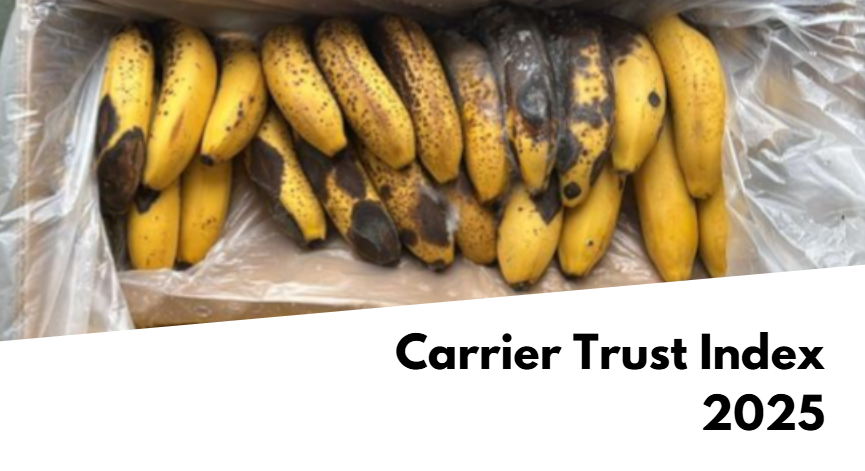
The bananas arrive damaged. And the seller still gets hit with a heavy debit note from the buyer.
Why do sellers keep taking the loss?
Honestly? History and habit.
It has always been easier for a buyer to pressure a seller into eating a loss than it is to force a shipping line to pay out a genuine cargo claim. So that’s what keeps happening — not because it’s fair, but because it’s familiar.
This is one of the biggest misunderstandings in the fresh produce trade today: sellers assume CIF protects them operationally after loading. It doesn’t.
If a buyer refuses to pay, a piece of paper that says “CIF” won’t put money back in your account.
Your best defense — and the shift happening right now
If you want to actually protect your business under CIF terms, your defense starts long before the ship leaves port. You need flawless pre-shipment evidence.
Your harvest certificate. Pre-cooling records. Packing and stuffing photos at origin. These are your only real shield — they prove you did your job correctly.
And here’s the good news: the market is starting to change.
Instead of buyers and sellers burning time and goodwill fighting each other over blame, we’re seeing a new trend take hold — collaboration. Buyers and sellers are pooling their evidence and going after the party actually responsible: the shipping line that damaged the cargo in the first place.
You don’t have to write this off as “the cost of doing business.” And you don’t have to fight the shipping lines alone.
If you’ve been hit with cargo damage or an unfair debit note, submit your claim to Recoupex today.
If we don’t win — you don’t pay.